

TMT Full Form to Fundamental Impact
The building sector depends on cutting-edge components to craft edifices that can endure across generations and withstand environmental elements. Amongst these components, TMT rods and rebars serve an essential function, delivering unparalleled robustness and longevity. But what precisely does TMT signify, and why is it fundamental in building? This piece explores the meaning of TMT full form, and its crucial role in moulding our surroundings.
What Is TMT?
TMT stands for Thermo-Mechanically Treated, a fabrication technique that yields high-strength reinforcement bars (rebars) and rods utilised in contemporary building. The TMT process encompasses a blend of thermal and mechanical processing and regulated cooling, generating steel with remarkable robustness, adaptability, and rust prevention qualities.
Notably, the designation TMT isn’t restricted to the building sector. For instance, in healthcare, the TMT full form in medical applications is Treadmill Test, a diagnostic procedure for assessing heart wellness. Nevertheless, within the building context, the TMT full form in steel denotes an innovative technology ensuring structural integrity and permanence.
The TMT Manufacturing Process
The Thermo-Mechanical Treatment process represents a specialised methodology that bestows distinctive characteristics upon TMT rebars. It encompasses three principal phases:
- Quenching: Following hot-rolling, metal bars undergo swift cooling via water streams. This instantaneous cooling the exterior layer, establishing a resilient martensitic (Hard)shell.
- Self-Tempering: Post-quenching, the bar’s interior maintains its warmth. Thermal energy from within flows outwards, tempering the martensitic surface and establishing a harmonious composition balancing strength with Ductility
- Atmospheric Cooling: The bars undergo cooling in a normal atmosphere, generating a ferrite-pearlite core. This concluding stage guarantees the metal’s excellent adaptability and endurance against dynamic pressures.
This sophisticated procedure renders TMT rebars more robust, malleable, and impervious to external factors like deterioration and seismic movements. Enterprises like Radha TMT, renowned for premium metal products, employ sophisticated techniques like THERMEX Quenching technology (German made) to manufacture rebars meeting rigorous contemporary building requirements.
Key Benefits of TMT bars in Construction
TMT rebars have transformed the building industry through their superior attributes. Here’s their significance:
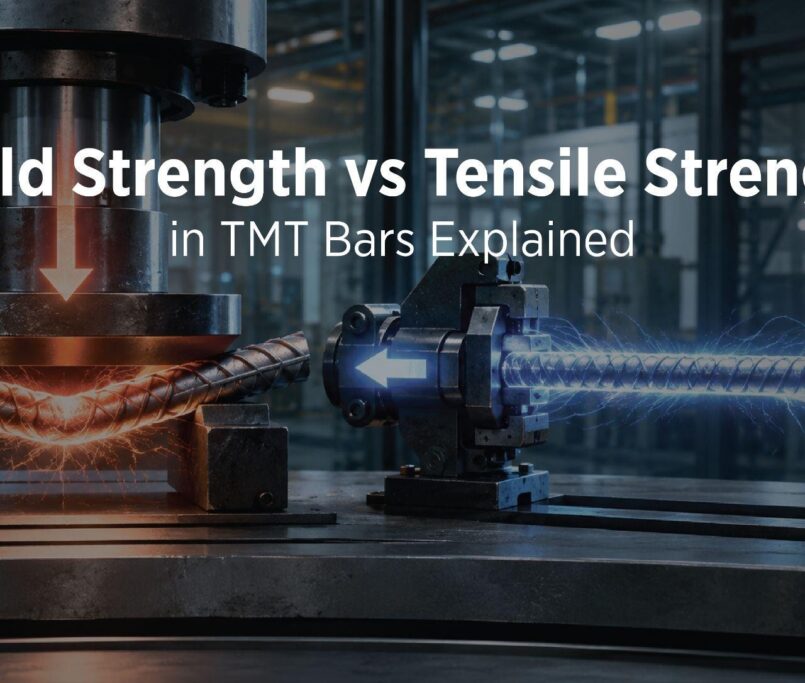
- Superior Strength: TMT rebars exhibit exceptional tensile strength, enabling them to sustain massive loads. This renders them crucial for reinforcing concrete structures and guaranteeing stability.
- Corrosion Resistance: The manufacturing methodology of TMT steel incorporates elements enhancing its defence against deterioration. This suits it for construction in maritime or moisture-rich environments where conventional steel would rapidly degrade.
- Earthquake Resistance: TMT rebars’ flexibility and malleability enable them to absorb and disperse seismic energy during tremors. This characteristic proves vital in earthquake-prone regions.
- Cost Efficiency: Since TMT bars offer enhanced strength and durability, they diminish overall metal requirements per project. This yields financial savings and minimises resource wastage.
- Compatibility with Modern Construction: TMT rebars’ textured surface ensures robust concrete adhesion, augmenting structural integrity and suiting them for towering edifices and intricate designs.
Applications of TMT Rods and Rebars
TMT rebars find widespread deployment across diverse building projects owing to their versatility and dependability. Principal applications include:
- Residential Buildings: TMT rebars constitute the foundational framework for dwellings and flats, ensuring durability and safety.
- Commercial Complexes: High-rises, shopping centres, and office structures rely on TMT rebars to support immense weights and maintain structural stability.
- Infrastructure Projects: Bridges, motorways, overpasses, and reservoirs employ TMT steel for its capacity to endure substantial stress and environmental challenges.
- Industrial Structures: Manufacturing facilities, storage units, and industrial complexes depend on TMT rods for their sturdiness and endurance.
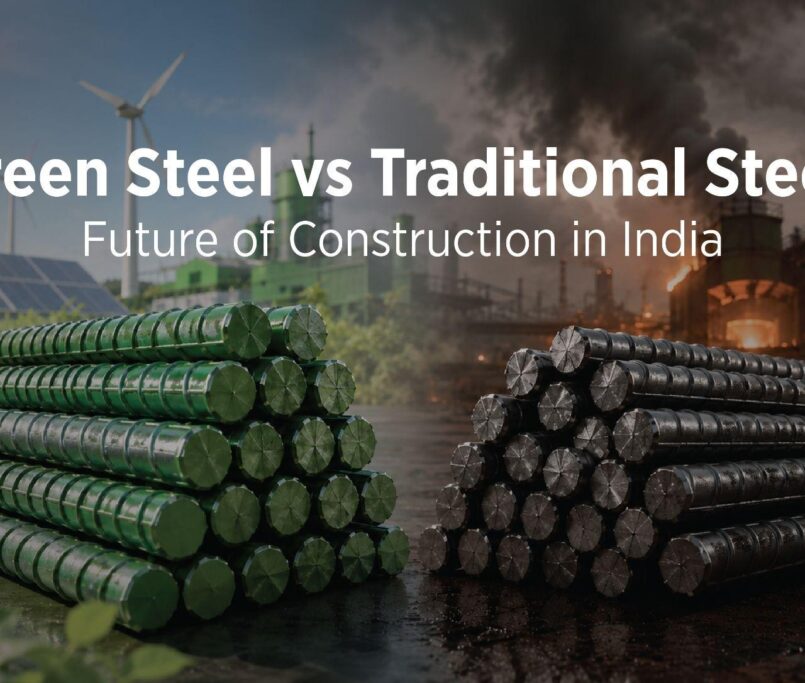
TMT vs. Conventional Steel
TMT rebars distinguish themselves when contrasted with traditional steel bars. Here’s why:
- Strength: TMT rebars deliver markedly superior tensile strength, proving more dependable for challenging building projects.
- Flexibility: The fusion of a hardy exterior and softer interior grants TMT rebars excellent malleability, minimising structural failure risks.
- Corrosion Resistance: Unlike standard steel, TMT rebars combat rust and deterioration, ensuring extended structural longevity.
- Better Bonding: TMT rebars’ ridged surface enhances concrete grip, boosting building stability and security.
How TMT Steel Is Shaping the Future of Construction
The implementation of TMT rods and rebars in construction has not merely enhanced structural robustness and security but also fostered sustainable building methodologies. Organisations like Radha TMT spearhead this progression, perpetually advancing TMT technology to produce rebars establishing fresh benchmarks in strength and longevity. For example, breakthroughs like intelligent alloying element addition for enhanced corrosion protection and improved seismic performance are becoming industry standards.
The requirement for TMT steel continues expanding as urban development and infrastructure enhancement accelerate. Its exceptional properties establish it as a cornerstone of contemporary construction, from residential developments to extensive infrastructure undertakings.
Conclusion
Grasping the TMT full form and its significance in steel production underscores its revolutionary role in the building sector. The distinctive attributes of the TMT rebar – strength, flexibility, corrosion resistance, and cost efficiency – render them an indispensable material for crafting structures that withstand temporal and natural challenges.
Whether concerning a residential property, commercial high-rise, or expansive infrastructure project, TMT rods and rebars prove fundamental to ensuring safety and longevity. As building challenges grow increasingly complex, the utilisation of advanced materials like TMT steel will only gain prominence.
In an era where quality and reliability prove paramount, TMT rebars exemplify innovation and advancement in construction. By selecting materials like Radha TMT, recognised for adherence to global standards, we can construct a future characterised by both resilience and permanence